
Photochromic Lenses in Bedfordview (Germiston)
Book your appointment for Photochromic Lenses (transition lenses) in Bedfordview with Larry Zunde Optometrists so you can enjoy crisp, comfortable vision indoors and outdoors without switching between your glasses.








Are photochromic / Transition lenses for me?
What are Photochromic lenses and their benefits?
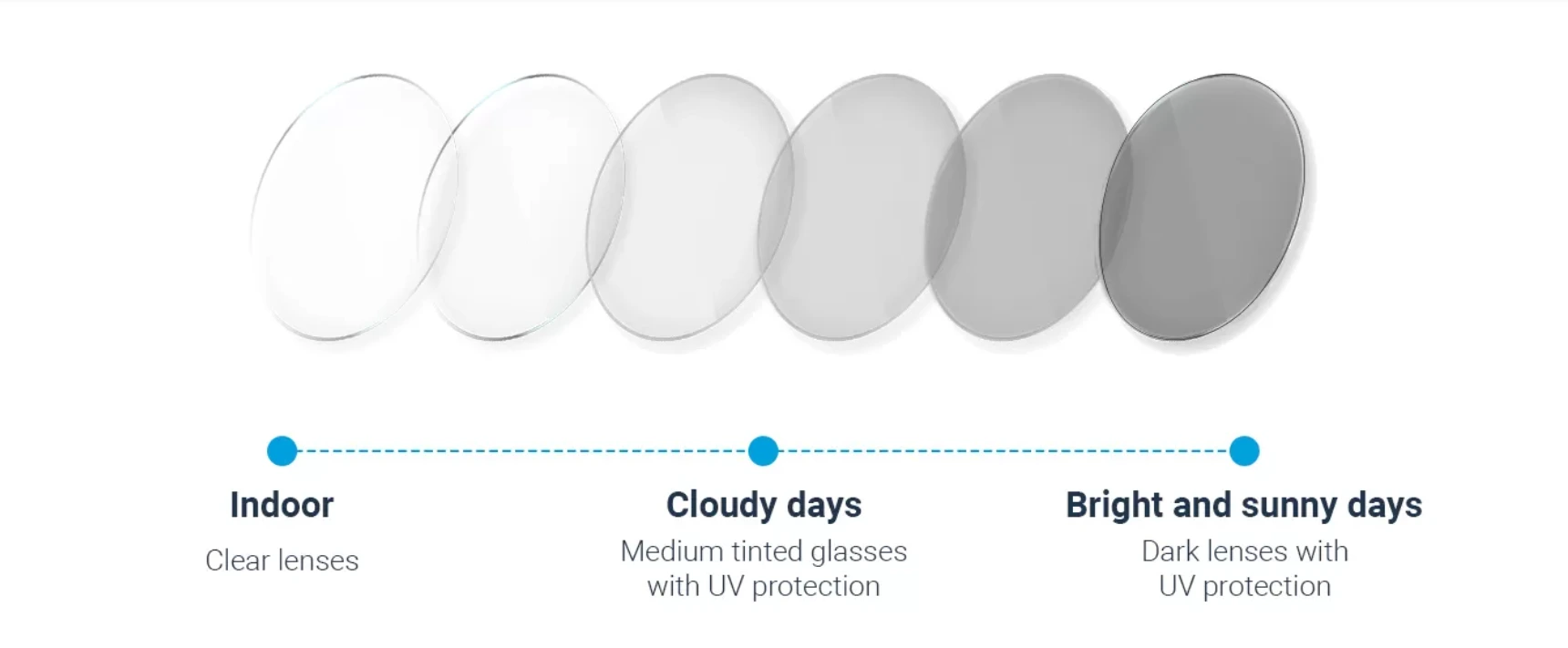
Photochromic lenses are prescription lenses that react to UV light.
Indoors they’re clear; outdoors they darken.
Tiny light-sensitive molecules inside the lens shift structure under UV, which changes how much light passes through.
That’s the science in a nutshell for you.
In practical terms, it means you wear one pair all day.
Office to parking lot. School run to sports field. Café to sunny pavement.
No pocketing a second pair. No guessing whether the clouds will part in ten minutes.
Patients often tell me, “It’s like my glasses know the weather before I do.” That’s the point: less fuss, more comfort, steady vision.

Are photochromic lenses better than polarized?
They solve different problems.
Polarized lenses cut harsh glare from reflective surfaces—windscreens, water, polished roads.
If glare is your main complaint, polarized wins that battle.
Photochromic lenses adapt to changing light.
They don’t cancel glare as strongly as polarized, but they handle bright-to-dim transitions with ease.
Many Bedfordview patients choose photochromic for their daily wear, then keep a polarized pair in the car for road trips or fishing weekends.
Think “daily driver” versus “specialist tool.” Some people like having both.

Do photochromic lenses block sunlight?
Yes. Good photochromic lenses block 100% of UVA and UVB.
That means protection while you shop, walk, or watch the kids play.
They also reduce overall brightness as they darken, which eases squinting and eye strain.
They respond to conditions, too. Light cloud cover? Mild tint. Summer midday in Bedfordview? Much darker.
You get consistent comfort without managing it yourself.
A quick note on driving: most windscreens filter a lot of UV, so lenses may not reach their darkest tint in the car.
For drivers who battle reflections off bonnets and the road, a separate polarized pair remains a smart backup.
Do photochromic lenses change color / photochromic lenses colors?
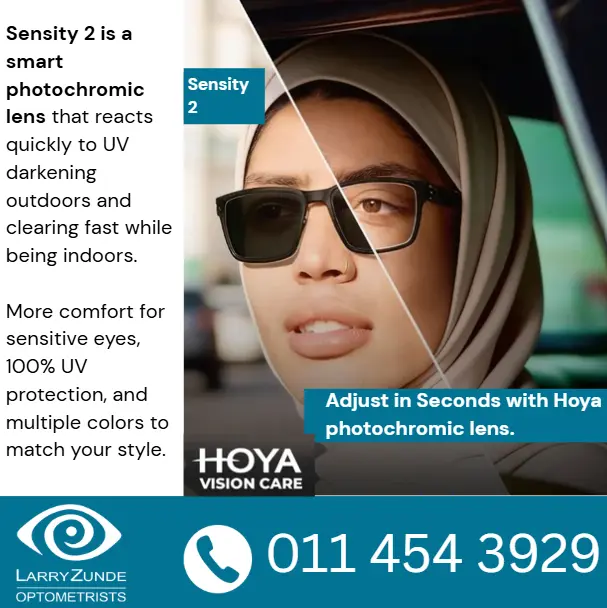
They change shade, and you can choose the look.
Grey and brown are the classics. Grey keeps colours neutral.
Brown adds a touch of contrast that many find soothing.
Some brands offer green or blue for those who want a bit more style while keeping clear optics.
Indoors, they return to clear. Step outside, and the colour deepens smoothly.
Step back in, and they fade back. The shift is quick enough that most people forget it’s happening—until they realize their eyes feel more relaxed at day’s end.


What is the difference between photochromic and transition lenses
“Photochromic” describes the technology. “Transition” is a brand name, so is “Sensity”.
All Transition lenses are photochromic, but not every photochromic lens is a Transition lens.
Think tissues and Kleenex—the same idea.
Different brands vary in speed of darkening, maximum tint, colour options, and durability.
That’s where an in-person chat helps.
We look at your prescription, how much time you spend outdoors, your typical routes around Bedfordview, and pick a lens family that fits your day.
Book your appointment for Photochromic lenses in Bedfordview today with Larry Zunde Optometrists
Photochromic lenses in Bedfordview give you clear indoor vision, outdoor tint, and full UV protection in one pair.
Polarized lenses still rule for glare, so many people use both.
The right choice depends on your routine, not a one-size pitch.
If you’re weighing your options, come in with a simple brief: where you spend time, how your eyes feel at the end of the day, and what bugs you most—glare, squinting, or the hassle of switching.
We’ll match a lens to that list and send you out with eyewear that feels like it finally keeps pace with Bedfordview life.
Or Fill in the Form Below
FAQs
-
Yes — you can absolutely add transition lenses (also known as photochromic lenses) to your prescription glasses.
These smart lenses respond to sunlight, darkening outdoors and clearing up indoors, so you don’t need to juggle between regular frames and sunglasses.
At Larry Zunde Optometrists, we make it easy to upgrade your everyday eyewear with adaptive lenses that adjust to your lifestyle — giving you comfort, convenience, and UV protection in one sleek solution. -
- Cleaning: Rinse dust, then wipe with a microfiber cloth.
- Heat: Don’t leave them on a dashboard in direct sun.
- Coatings: Anti-reflective coating helps night driving and screen use. A hard coat resists scratches.
- Frames: Choose a frame that sits close enough to block side light but still breathes on hot days.
These details keep your lenses working well and looking good.
- Cleaning: Rinse dust, then wipe with a microfiber cloth.
-
Our optometrists stock an array of prescription lenses for your convenience and maximum eye comfort
- Anti Glare Lens
- Polarized lenses
- Tinted lenses for glasses
- UV rays lenses
-
Yes they do
At Larry Zunde Optometrists, every pair of prescription and non-prescription lenses comes with built-in UV 400 protection, including our photochromic (adaptive) lenses.
That means your eyes are shielded from up to 400 nanometres of ultraviolet light — covering UVA, UVB, and even UVC rays.
Why does that matter? UV exposure builds up over time and can lead to long-term eye damage.
Our lenses help block that risk while giving you the freedom to move between indoors and outdoors without switching glasses.
Bottom line: You get smart sun protection, clear vision, and peace of mind — all in one pair.
-
You can buy transition lenses in Bedfordview from Larry Zunde Optometrists.
At our practice, you can expect an abundant range of frames with different styles to cater to different style aesthetics, whether you need bold, minimal, modern, vintage-inspired or colourful frames.